 Cartagena City Guide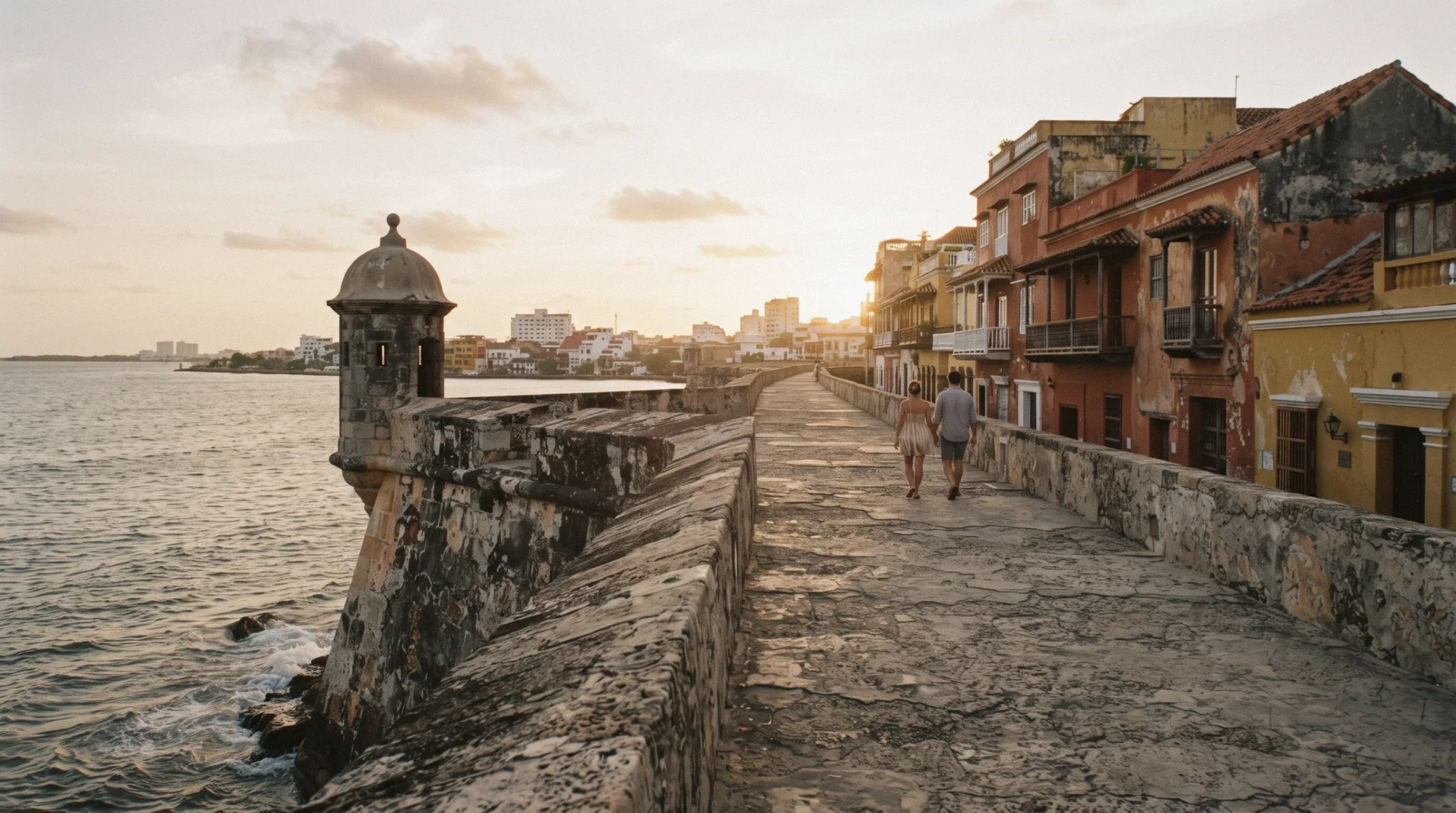
The Cartagena Walled City (Ciudad Amurallada)
The Cartagena walled city, the Ciudad Amurallada, is the ring of stone fortifications that wraps the historic center: eleven bastions, four surviving gates and roughly two and a half miles of curtain wall raised over more than two centuries to keep pirates and rival navies out. This page is part of an independent Cartagena travel guide covering the walk itself, which stretches you can actually climb onto the parapet, where Las Bóvedas sits at the north end, why the sunset stretch by Baluarte de Santo Domingo draws a crowd every evening, and the plain fact that no city or heritage authority publishes hours or an admission rule for the walls. "Free and always open" is the working assumption here, not a posted policy. Beyond this page, the Cartagena city guide sets this walk beside everything else worth your hours.
Quick answer What the walls are, what it costs, and where you can actually climb onto them
The Cartagena walled city is free to walk. Its eleven bastions and four gates ring the historic center and carry no admission fee or published opening hours, because no city or heritage authority has ever posted either. What decides your visit is not a ticket, it is knowing which stretch of parapet is actually open to walk on top of: the main public climb runs from Baluarte de Santo Domingo north toward Las Bóvedas, while most of the rest of the ring is a street-level walk beside the wall rather than a walk on it.
Key takeaways
- The wall-top walk that everyone photographs at sunset is the Baluarte de Santo Domingo stretch, reached from the plaza by the same name inside the Getsemaní side of the walls.
- Las Bóvedas, the row of former munitions vaults turned into a souvenir arcade, sits at the walls' north end and is also free.
- If you would rather have the history explained while you walk, a shared walking tour covers the walled city and Getsemaní for $14.81, and a private 4-hour tour does the same route one-on-one.
Key facts
Opening hours
| Streets, gates and public bastions | No official hours published. Treated as always accessible, which is an assumption, not a posted rule |
|---|
Closed None published
Admission
- Adult
- Free to walk the streets, gates and public bastions. No authority publishes an admission price for the walls
Planning it
- Time needed
- Not stated by any authority. Our routing: 45 to 90 minutes for the main wall-top stretch and gates, longer with stops for photos and a drink at sunset
- Book ahead
- Optional — walk-up usually fine
- Address
- Centro Histórico (Ciudad Amurallada), Cartagena de Indias, Bolívar, Colombia
Four ways to spend time on the walls, priced from GetYourGuide listings against the plain fact that self-guided walking costs nothing. No official source publishes an admission fee for the walls, so the first row below is a statement of that finding, not a ticket price.
There is no ticket to buy for the walls themselves. The real choice is whether you walk them on your own for free, pay a guide to explain what you are looking at, or turn the walk into a short private experience.
| Option | Price | Includes | Cancel | Book |
|---|---|---|---|---|
| Walk the walls on your ownAnyone comfortable navigating with a map and reading the plaques themselves | Free | Open access to the gates, streets and public bastions, no ticket exists | Nothing to cancel | Official site |
| Shared walking tour, historic center + GetsemaníFirst-timers who want the history and the layout explained without paying for a private guide | From $14.81 | A guide covering the walls, gates and both neighborhoods, small shared group | Free up to 24 hours before | Check Availability |
| Private walled city + Getsemaní tour, 4 hoursFamilies, small groups or anyone who wants the guide's full attention and a slower pace | From $80.87 | A private guide, your own pace, both neighborhoods and the walls in one longer route | Free up to 24 hours before | Check Availability |
| Vintage car ride with photo shootAnyone who wants a short, photogenic ride rather than a walking history lesson | From $24.69 | A 15-minute ride and photo session in a classic car along the walls and plazas | Free up to 24 hours before | Check Availability |
Self-guided walking costs nothing and always will, since no ticket office exists for the walls. Tour prices are the operators' own listings on GetYourGuide. Figures current in Q3 2026.
Walking tours and rides on the walls
Every card below links to the operator's own booking page, where the live calendar shows what is still open for your date. Prices in USD as listed by GetYourGuide.
 from $14.81
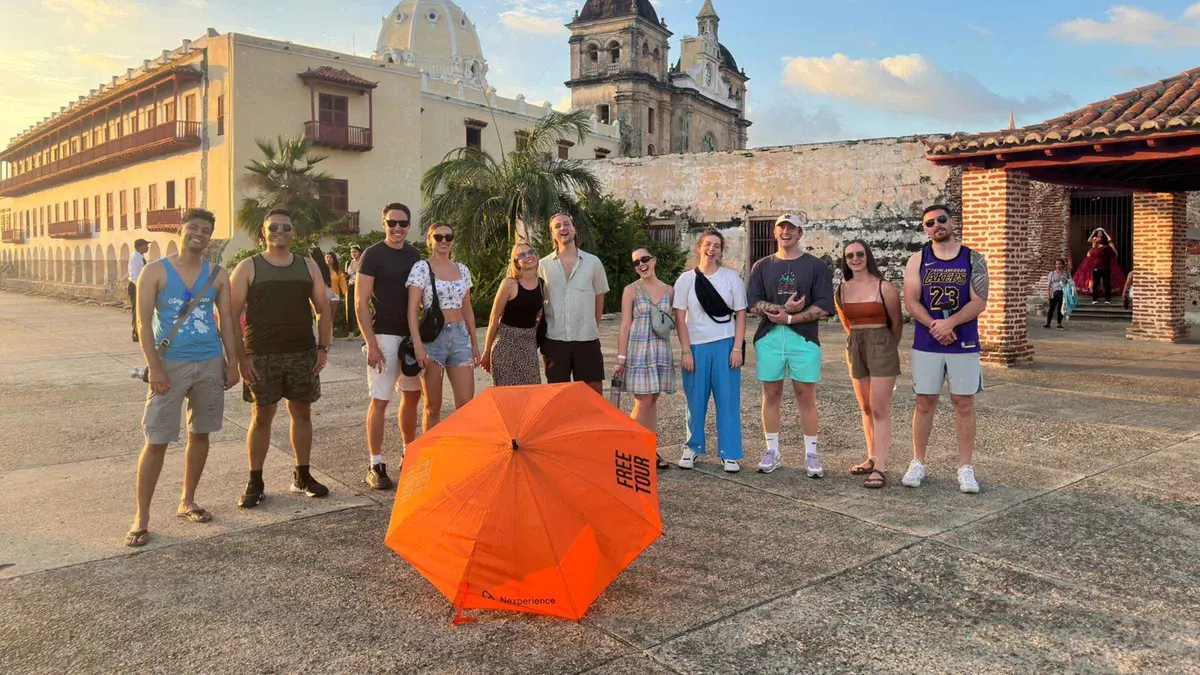
Cartagena: Historic Center and Getsemaní Shared Walking Tour
A shared 2.5-hour walk through the Walled City and into Getsemani, covering the slave-trade history, the Clock Tower and the plazas behind it. Groups can run large since it's a shared departure, and there's no seating or shade break built into the route.
Check Availability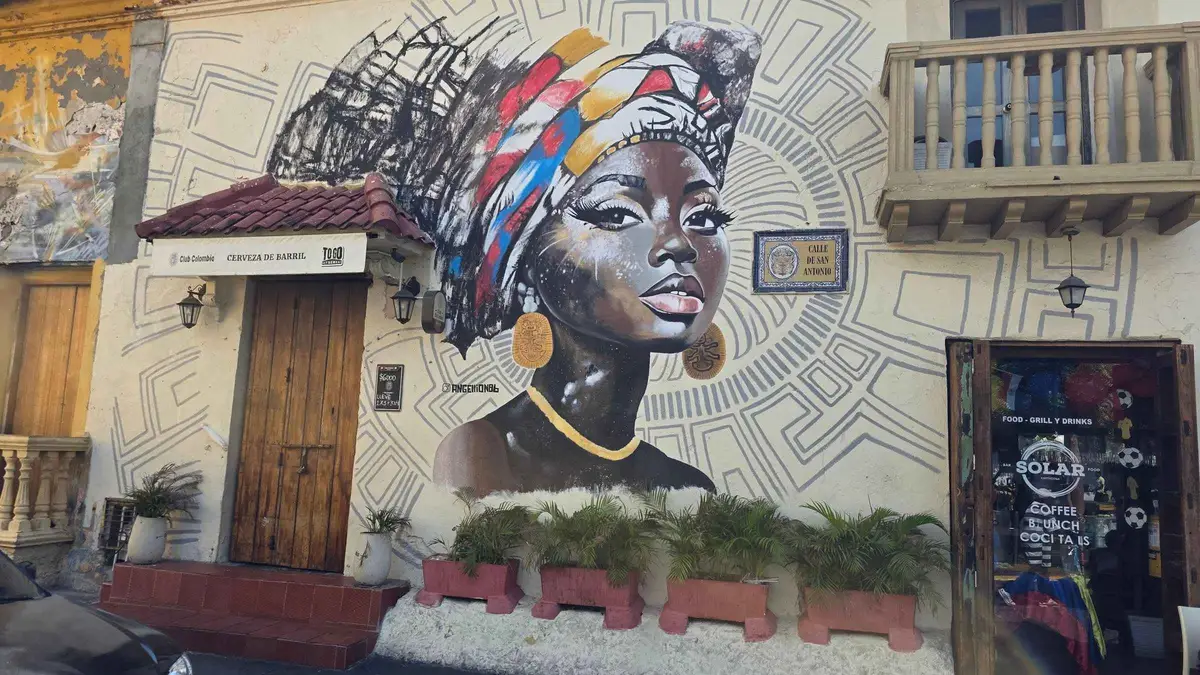 from $22.40
Cartagena: Walking Tour - 6 Language Options
The same Historic Center and Getsemani ground covered by most walking tours here, but with a live guide offered in six languages including French, German, Portuguese and Italian. It suits mixed-nationality groups, though reviewers say the content overlaps heavily with other walking tours if you've already done one.
Check Availability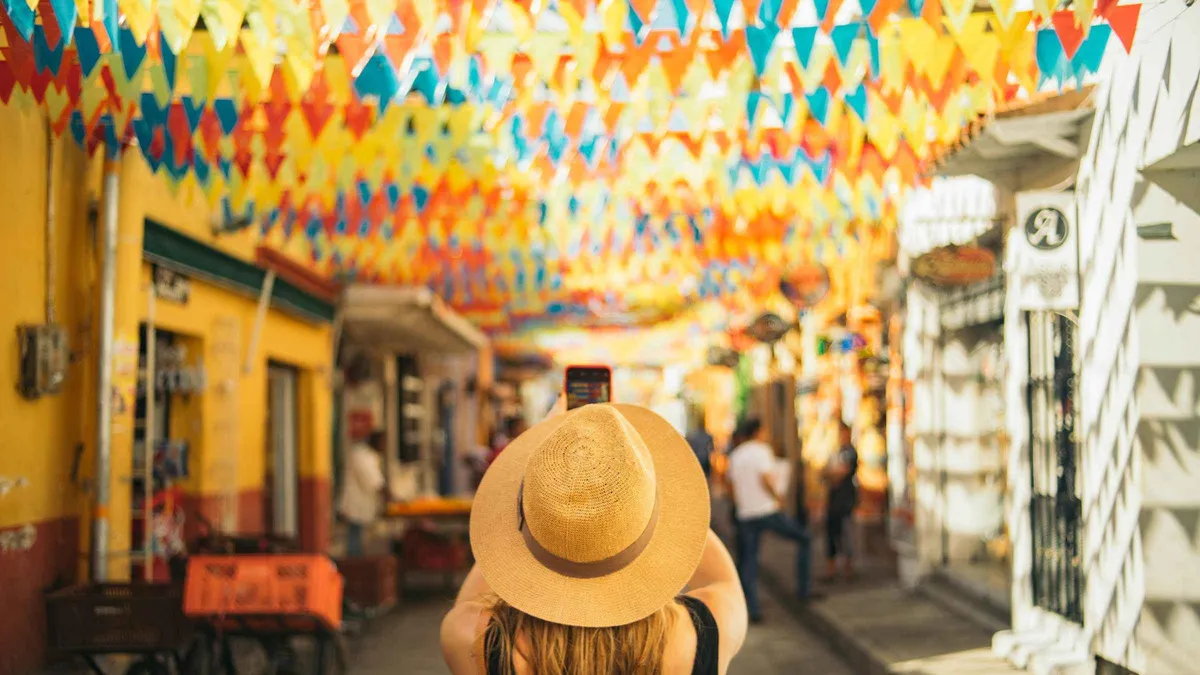 from $80.87
Cartagena: Walled City & Getsemani Private Tour
A private version of the Walled City and Getsemani route, with two Colombian snack tastings and an optional 30-minute drive out to Castillo San Felipe de Barajas at extra cost. Private pricing makes it one of the more expensive walking options here, and the castle stop isn't included in the base price.
Check Availability from $24.69
Vintage car ride with photo shoot in Cartagena das Índias
A vintage-car ride and photo shoot through the Walled City in a classic 1930s to 1950s car, ending with a styled photo session. It's built around the photos more than sightseeing narration, so it's not the tour to pick if you want a detailed history walk.
Check AvailabilityPrices, ratings and details are the platform's own. dollar figures are the listed prices — the platform bills in your account's currency.
What the Ciudad Amurallada is
Cartagena de Indias was founded on 1 June 1533 by the Spanish conquistador Pedro de Heredia, and for its first decades it had no walls at all. That gap was expensive. In 1544 the French pirate Jean-François Roberval pillaged the city with five ships and a thousand men, taking advantage of a port that could not defend itself, and Heredia had to retreat inland until a ransom was paid. More raids followed, and in April 1586 Francis Drake arrived with 23 ships and 3,000 men, burned roughly 200 houses and the cathedral, and left only after Spain paid to get him to go.
That attack is the reason the walls exist. Spain commissioned the Italian military engineer Bautista Antonelli that same year to design a defense scheme for its Caribbean ports, and in 1594 he returned to Cartagena with the actual plan for a walled city. Construction then ran for roughly two centuries, adding bastions, extending the curtain wall around Getsemaní and reinforcing weak points after every attack that found one, until the ring you can walk today was substantially complete by the late 1700s. In 1984 UNESCO inscribed the port, fortresses and monumental group of Cartagena as a World Heritage Site, the walls among them.
The walls in ten dates
-
1 June 1533
Cartagena is founded
Pedro de Heredia establishes the city on the bay, with no defensive walls at all. [Wikipedia, Cartagena, Colombia, read for this guide]
-
1544
The first major sack
French pirate Jean-François Roberval pillages the undefended port with five ships and 1,000 men. [Wikipedia, Cartagena, Colombia]
-
April 1586
Francis Drake's attack
23 ships and 3,000 men burn about 200 houses and the cathedral before a ransom is paid. [Wikipedia, Cartagena, Colombia]
-
1586-1594
Antonelli's plan
Spain commissions engineer Bautista Antonelli to design Caribbean port defenses. He returns in 1594 with the plan for a walled city. [Wikipedia, Cartagena, Colombia]
-
1654
The landward fort is completed
Castillo San Felipe de Barajas, the hilltop fort protecting the walls from inland, is finished (later expanded through the 18th century). [Wikipedia, Cartagena, Colombia]
-
1697
Baron de Pointis breaches the walls
A French force under Baron de Pointis and Jean Baptiste Ducasse breaches the Half Moon Gate and occupies Getsemaní, and the city capitulates after a month of plunder. [Wikipedia, Cartagena, Colombia]
-
1704
Puerta del Reloj takes shape
Engineer Juan de Herrera y Sotomayor begins the design that becomes the main gate into the walled city. [Wikipedia, Cartagena, Colombia]
-
April 1741
Vernon's siege fails
A British armada under Admiral Edward Vernon besieges the city. The Spanish defense under Blas de Lezo repels the attack on the landward fort and the walls hold. [Wikipedia, Cartagena, Colombia]
-
1762-1796
The last expansions
Engineer Antonio de Arévalo's defense plan drives further reinforcement of the bastions and curtain wall through the late 1700s. [Wikipedia, Cartagena, Colombia]
-
1984
UNESCO World Heritage inscription
The port, fortresses and monumental group of Cartagena, walls included, are inscribed as a World Heritage Site. [Wikipedia, Cartagena, Colombia. Wikidata Q6091925]
The gates and baluartes: where you can get up on the wall and where you cannot
Sixteen of the roughly twenty original fortifications that ringed the city and Getsemaní still stand today, connected in sections by the curtain wall. Four gates let you pass through that ring: Puerta del Reloj, the main entrance facing Plaza de la Paz and opening onto Plaza de los Coches, Puerta de Getsemaní on the south side, and two smaller passages nearer the bay. Puerta del Reloj itself is not open to climb, its clock tower interior is closed to visitors, and what you actually visit there is the gate passage and the plaza on either side, not the tower.
Not every stretch of the wall lets you walk on top of it, and no official source publishes a map of which sections do. In practice, and confirmed by multiple independent visitor accounts rather than any single authority, the reliable wall-top walk starts at Baluarte de Santo Domingo, on the Getsemaní-facing side near the bay, and runs north past a run of connected bastions toward Santa Clara and San Francisco. That is the stretch with the iron cannons along the parapet, the sea view over the bay, and the bars and cafes set into the old vaults below. Most of the rest of the ring, especially the sections facing the newer city on the east side, is a street-level walk alongside the wall rather than a climb onto it. If a stretch of parapet looks closed off or has no visible stair up, treat that as the answer, since nothing here is posted as a right of access.
Las Bóvedas and the sunset stretch
Las Bóvedas sits at the north end of the walls on Calle 32, built into the wall structure next to Baluarte de Santa Catalina. The name means "the vaults," and that is exactly what they were: 23 arched storage chambers built to hold munitions and later used as a military prison, now converted into a row of souvenir shops selling hammocks, sombreros vueltiaos and Cartagena magnets. Entry is free, same as the rest of the wall, and the roof above the vaults gives one of the better Caribbean sea views from the entire fortification ring. It is a short stop rather than a destination in itself, worth folding into the same walk as the wall-top climb nearby.
The sunset stretch is Baluarte de Santo Domingo, a few minutes' walk south of Las Bóvedas on the wall's western, sea-facing side. This is where the crowd gathers every evening: the cannons along the parapet, the open sky over the Caribbean, and a run of bars built into the old vaults below the wall itself, the best known of them serving the view along with the drinks. Arrive with 30 to 45 minutes of daylight left to claim a spot, because the parapet is narrow and fills up fast once the light turns gold. Mornings on the same stretch are close to empty, which is the trade if photographs without a crowd in them matter more than the sunset colors.
How much time to give the walls
Three ways to route the walk
No authority publishes a recommended visit length for the walls, so the routings below are our own estimates based on walking the distances at an ordinary pace with stops for photos.
| Routing | What it covers | What it skips | Time |
|---|---|---|---|
| Quick loop | Puerta del Reloj, Plaza de los Coches, a look up at the nearest bastion | The wall-top walk and Las Bóvedas | About 20-30 minutes |
| Full wall walk | The Baluarte de Santo Domingo climb, the parapet stretch north, Las Bóvedas at the end | Nothing on the ring itself | About 60-90 minutes, longer at sunset with a drink stop |
| With a guide | A shared walking tour or private tour explains the gates and history while you walk the same route | Independent pace, since the guide sets the stops | About 90 minutes to 4 hours depending on the tour |
Do
- Arrive at Baluarte de Santo Domingo 30 to 45 minutes before sunset to get a spot on the narrow parapet.
- Wear real shoes. The wall-top stones and the stairs up to the bastions are uneven and worn smooth in places.
- Carry water and a hat. There is almost no shade on the parapet at midday.
- Check both Las Bóvedas and the sunset stretch in one visit, they sit a short walk apart at the same end of the ring.
- Keep small peso notes on you if you plan to buy anything at the Las Bóvedas stalls or a drink at a wall-top bar.
Don't
- Do not expect a ticket office or a published opening time, neither exists for the walls.
- Do not climb onto a stretch of wall that has no visible stair or looks fenced off, treat that as closed regardless of what a map app suggests.
- Do not carry valuables loosely at sunset, the crowded stretch draws the same pickpocket risk as any busy tourist spot.
- Do not skip the morning if you want photos without a crowd, the same stretch that is packed at sunset is close to empty before 9am.
- Do not confuse the clock tower gate, Puerta del Reloj, with something you can climb inside, the interior is not open to visitors.
Five things most visitors do not know about the walls
- The walls took over two hundred years to finish. Antonelli's first plan dates to 1594, and reinforcement work continued into the 1790s under later engineers, including Antonio de Arévalo's 1762 defense plan [Wikipedia, Cartagena, Colombia, read for this guide]. - The city was walled because of one raid, not a general fear of pirates. Francis Drake's 1586 attack, which burned 200 houses and the cathedral, is the specific event that got Spain to commission the fortification scheme that year [Wikipedia, Cartagena, Colombia]. - The walls have been breached exactly once by force. Baron de Pointis's 1697 raid broke through the Half Moon Gate and took Getsemaní, the only time an enemy force got past the fortifications rather than being repelled at them [Wikipedia, Cartagena, Colombia]. - Las Bóvedas were never meant for tourists. The 23 vaults were built to store munitions and later served as a military prison before becoming the souvenir arcade you walk through today [facts pack, ETCAR historic-center visitor page]. - No authority has ever published hours for the walls. Every other major monument in the historic center, the fort, the museums, the churches, prints a schedule somewhere official. The walls are the one landmark in this guide with genuinely no posted rule, which is itself the most useful fact on this page for planning around it [ETCAR historic-center visitor page, checked 2026-09-18].
Getting to the walls and where the walk fits in a Cartagena day
Puerta del Reloj is the natural starting point for most visitors, since it is the main gate and the one most taxis and rideshares default to. From there, Plaza de los Coches and Plaza de la Aduana sit just inside, and the wall-top climb at Baluarte de Santo Domingo is roughly a 10 to 12 minute walk south through the old town's grid. Walking is the only way to actually experience the walls themselves, since no vehicle route runs along the parapet.
A natural day pairs a morning inside the walled city with Getsemaní in the afternoon, since the two sit back to back and share the same fortification ring. If time is tight, the walk works as a bookend: do the historic center's plazas and churches first, then finish the day at Baluarte de Santo Domingo for sunset before dinner in one of the wall-top bars or heading into Getsemaní for the evening.
Walled city map: gates, the wall-top walk and Las Bóvedas
The four points that structure a walk around the Ciudad Amurallada, from the main gate to the sunset stretch and Las Bóvedas at the north end.
Next stop from the walls
Walk minutes are our estimates from the GPS distances, starting from Puerta del Reloj.
Getsemaní
The neighborhood just south of the walls, sharing the same fortification ring. Street art, Plaza de la Trinidad and the city's nightlife district.
About 400 mCastillo San Felipe de Barajas
The hilltop fort that protected the walled city from inland attack, with a real ticket, published hours and the tunnels the walls themselves do not have.
About 1.5 km, or a short taxi ridePalacio de la Inquisición
The colonial-era tribunal building on Plaza de Bolívar, inside the walls a few minutes from Puerta del Reloj.
About 250 mCartagena walled city questions
Is the Cartagena walled city free to visit?
Yes. Walking the streets, gates and public bastions of the Ciudad Amurallada carries no admission fee, and no authority publishes one. The only costs are optional: a guided walking tour from $14.81, a private tour from $80.87, or a vintage car photo ride from $24.69.
What are the opening hours for the Cartagena walls?
None are published anywhere official. The gates, streets and public bastions read as open around the clock in practice, but that is a working assumption based on how the site functions, not a posted rule from any city or heritage authority.
Can you walk on top of the walls in Cartagena?
In sections, yes. The reliable wall-top climb is at Baluarte de Santo Domingo, running north toward Las Bóvedas. Most of the rest of the ring is a street-level walk beside the wall rather than on top of it, and no official map states exactly which stretches are open, so treat a section with no visible stair as closed.
Where is Las Bóvedas in the walled city?
At the north end of the walls on Calle 32, next to Baluarte de Santa Catalina. It is a row of 23 former munitions vaults, now a free souvenir arcade a short walk from the Baluarte de Santo Domingo sunset stretch.
Is Cartagena's walled city safe to walk at night?
The walled city itself is one of the more patrolled and well-lit parts of Cartagena, and the sunset crowd at Baluarte de Santo Domingo keeps the stretch busy into the evening. Standard city precautions still apply: keep valuables secure and stick to the lit, populated sections rather than empty side stretches of the wall.
Why is Cartagena called a walled city?
Because its historic center is still ringed by the fortifications Spain built after Francis Drake's 1586 attack, sixteen bastions and four gates connected by curtain wall, raised over more than two centuries and largely intact today. That ring is what UNESCO inscribed as part of the 1984 World Heritage listing.
The walled city on film
Three walk-throughs of the Ciudad Amurallada that show the gates, the wall-top stretch and the plazas before you stand on them yourself.
CARTAGENA COLOMBIA Walking Tour 2026: Old City, Getsemaní & Bocagrande (4K)
A street-level walk through the old city and Getsemaní, including the gates and plazas covered in this guide.
Video: Recorri2Cartagena, Colombia: From The Hood To The Walled City | Walking Tour 4k
A walking route into the walled city that shows the transition from Getsemaní through the gates.
Video: sebstravelsCartagena Night Walk 2026: Walled City Cultural Tour | Real Sound 4K
An evening walk through the walled city, useful for seeing how the streets and plazas feel after dark.
Video: Travels by TreVideos load from YouTube only when you press play.
Prices, hours and terms are set by the venue or operator and confirmed at checkout.
We may earn a commission if you book through one of our links, at no extra cost to you. Full affiliate disclosure