 Cartagena City Guide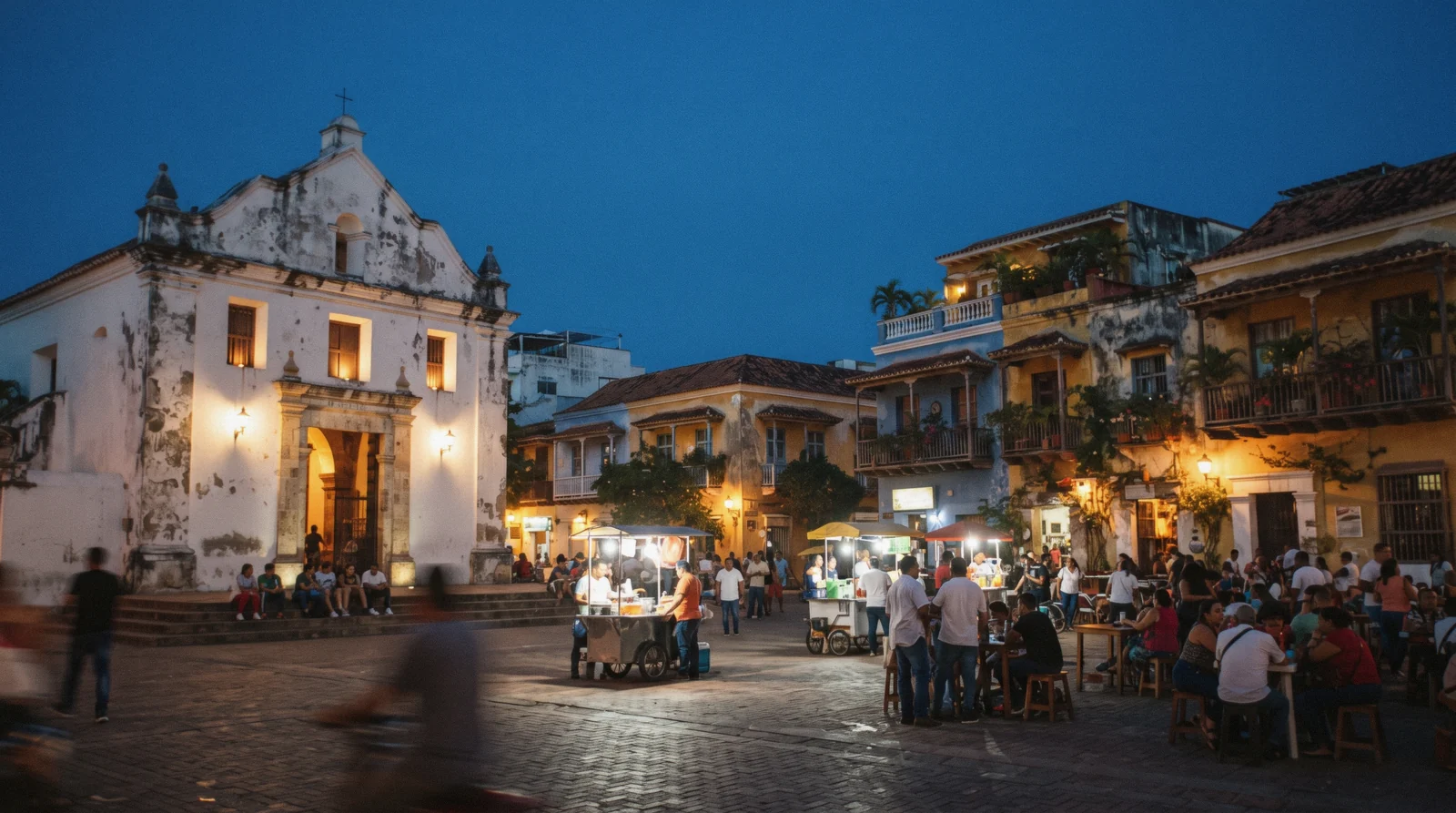
Getsemaní, Cartagena: Plaza de la Trinidad After Dark
Getsemani Cartagena is the barrio immediately south of the walls of the Centro Histórico in Cartagena, Colombia. For most of its history it was the city's working-class and artisan district, built outside the fortifications that sheltered the colonial elite. This page answers what the Getsemaní neighborhood is like, day and night. Today it holds most of the city's hostels, most of its famous murals and its loudest evening crowds, all centred on Plaza de la Trinidad. This guide covers what the barrio actually is, what you can verify about the street art, what changed in recent years, and the honest version of staying here versus coming for an evening. If you want the walled sectors and the museums inside them, read our Centro Histórico page, which covers San Diego and El Centro in detail. Start with our Cartagena city guide for the wider picture.
Quick answer What Getsemaní is and what happens after dark
Getsemaní is Cartagena's working-class barrio immediately south of the walled city, now the centre of the city's hostel, street-art and nightlife scene. Its evening life gathers on Plaza de la Trinidad, where food carts, music and a crowd build after dark, heaviest on weekends.
Key takeaways
- The walled sectors next door are covered in our Centro Histórico guide, so this page stays inside the barrio.
- The most direct way in is the Getsemaní walking tour covering culture and street art at $78.00, rated 4.8 from 42 reviews.
- If you are weighing a stay here against the walled city or the beach, our where to stay page names Getsemaní as one of its areas.
- The church on the plaza, the Iglesia de la Trinidad, keeps its own separate schedule that is not officially published, so do not assume the party hours and the churchgoing hours match.
A Tuesday in Getsemaní Versus a Saturday
This contrast is the guide's own observed reading of how the barrio behaves through the week, not an official survey, and no municipal count of plaza visitors exists. Use it to decide which night suits you.
| What you notice | A quiet weekday | A Saturday night |
|---|---|---|
| The plaza crowd | A lighter, local gathering, with space to sit on the church steps | A dense crowd that builds after dark and keeps the plaza full well into the night |
| Street food carts | A smaller row of carts serving people passing through | A full line of carts working a busy night trade, with queues at the popular ones |
| Music and noise | Music comes and goes and the evening quiets earlier | Music from the plaza and surrounding bars runs late and carries into the side streets |
| Booking a table | Walk-ins are usually easy in the bars around the plaza | Tables fill, and the busiest spots around the plaza can mean waiting |
| Best fit | Travellers who want the plaza's character without the crush | Travellers who want the neighbourhood at full volume |
This is a weekday versus weekend contrast, not a priced comparison. Figures current in Q3 2026.
Guided Ways Into the Barrio
Three booked options appear in our listings, and they do different jobs. One stays inside Getsemaní the whole time. One passes through on a longer ride. One treats the barrio as half of a wider historic walk. Pick by how much of the neighbourhood you actually want.
 from $78
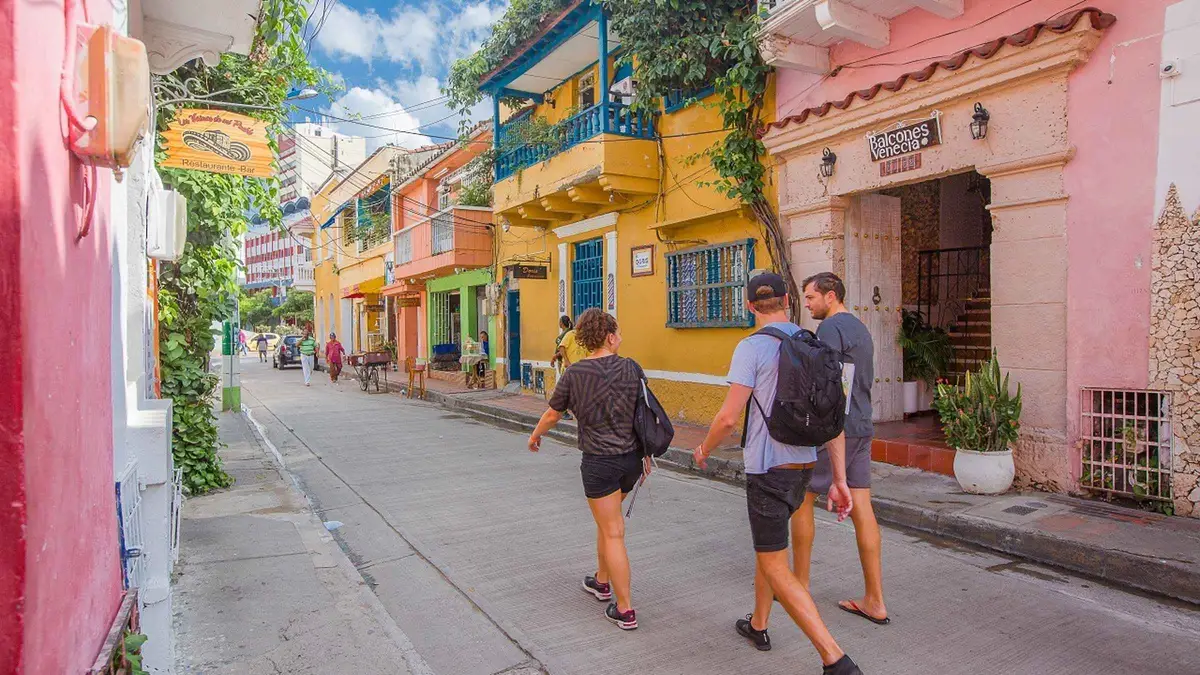
Getsemaní, CTG Walking Tour: Culture, Street Art, and More
A 2-hour walk through Getsemani's mural-covered streets with one complimentary local drink included, listed as wheelchair accessible. It skips the Walled City entirely, so pair it with a separate tour if that's also on your list.
Check Availability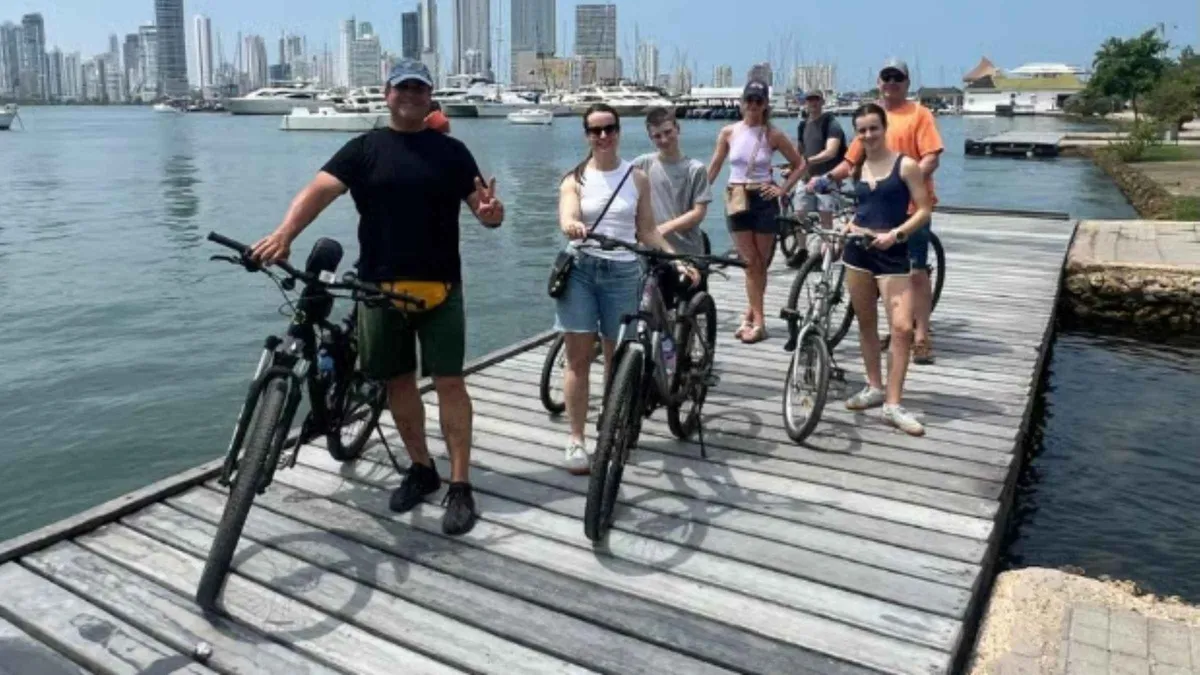 from $63.75
Fun Bike Ride with Lunch at Anthony Bourdain Favorite Spot
A 3-hour bike ride through Manga, Getsemani and Bazurto Market with lunch at the spot chef Anthony Bourdain featured on television, capped at 10 riders. It mixes street traffic with market crowds, so it suits confident cyclists more than beginners.
Check Availability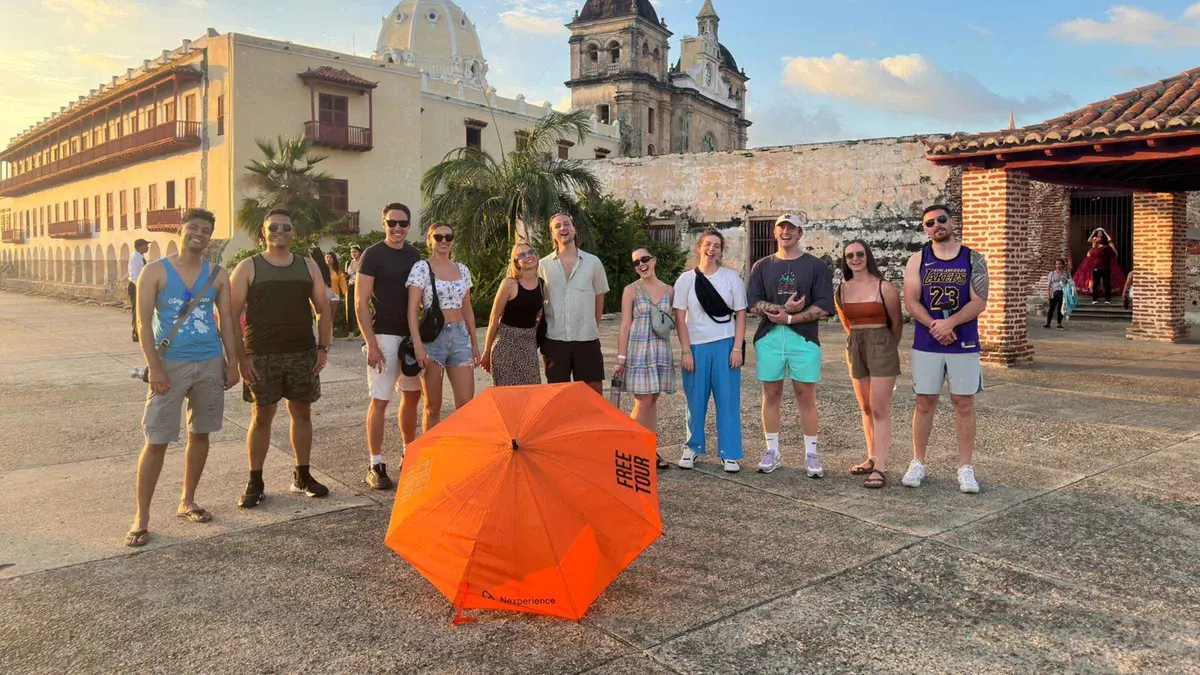 from $14.81
Cartagena: Historic Center and Getsemaní Shared Walking Tour
A shared 2.5-hour walk through the Walled City and into Getsemani, covering the slave-trade history, the Clock Tower and the plazas behind it. Groups can run large since it's a shared departure, and there's no seating or shade break built into the route.
Check AvailabilityPrices, ratings and details are the platform's own. dollar figures are the listed prices — the platform bills in your account's currency.
What Getsemaní Is, and Why It Looks Different From the Walled City
The barrio south of the walls has its own character, its own history and its own look.
The Barrio Outside the Fortifications
Getsemaní sits on the landward side, immediately south of the fortifications that ring the Centro Histórico. Historically it was the city's working-class and artisan barrio. The walls sheltered the colonial elite inside.
The people who built those walls, hauled the stone and worked the port lived out here, a founding history summarised in the barrio's Wikipedia entry. That origin still shapes the place. The streets are narrower, the houses are humbler than the mansions inside the walled city, and the public life happens on the street rather than behind them.
Plaza de la Trinidad is the clearest expression of that, a plain square in front of a plain church where the neighbourhood gathers instead of a parade ground lined with palaces.
The Shift Everyone Notices
In recent years Getsemaní became the centre of Cartagena's hostel scene, its street-art scene and its nightlife. More hostels opened. More bars opened.
More murals were commissioned as public art on walls that had been plain. Backpackers arrived first, then bars and restaurants followed the backpackers, then the evening foot traffic grew around Plaza de la Trinidad. That shift is real and widely reported, and you can see it on any walk through the barrio in the form of hostel signs, mural-covered facades and crowded night-time streets.
What We Cannot Tell You, Honestly
No official body publishes a rent index for Getsemaní, a count of how the resident population changed, or any gentrification statistic specific to the barrio. This guide looked for one and could not confirm it. We will not invent a percentage, a displacement figure or a price trend.
What we can describe is what is visible: more hostels, more bars, more murals, and far more foot traffic after dark than a purely residential working-class barrio would generate. We return to what that means for visitors in the honest version section below.
Plaza de la Trinidad: The Neighbourhood After Dark
One square, one church, and the whole evening economy of the barrio around them.
How the Evenings Work
Plaza de la Trinidad, in front of the Iglesia de la Trinidad, is the neighbourhood's evening gathering point. Street food carts set up around the square. Music plays.
The crowd builds after dark and grows heavier as the week moves toward the weekend. On a Saturday the plaza is the densest public space in the district. On a quiet weekday it is still the centre of local evening life, just at a gentler volume.
The pattern matters for planning. If you come for dinner and atmosphere without the crush, aim early in the week. If you want the full street-party version, you will find it late in the week.
The Iglesia de la Trinidad and Its Unconfirmed Hours
The Iglesia de la Trinidad stands at Carrera 10 #25, facing the plaza. There is no confirmed official schedule for visiting it. Two conflicting third-party ranges circulate: one gives daily 8:00 a.m. to 6:00 p.m., and another gives Tuesday to Sunday 8:00 a.m. to 3:00 p.m. with Saturday 8:00 a.m. to 12:00 p.m.
Neither reading traces to the Diócesis de Cartagena's own schedule tool, which was under maintenance when we checked, so neither has been confirmed by the parish. We present both and pick neither. Admission, where it applies, is unverified but commonly free or by donation.
Treat any published hour you find elsewhere with the same suspicion until the parish publishes its own schedule.
The Gotcha: Church Hours Are Not Party Hours
Here is the detail that trips people up. The plaza's reputation is a nightly street party, and on that basis many visitors assume the church beside it is simply open in the evening too. It is not.
The Iglesia de la Trinidad keeps its own separate churchgoing schedule, which as shown above is not officially confirmed and runs, on one reading, to mid-afternoon. If you want to see the inside of the church, go in the morning on your way through the barrio. Do not build your evening around stepping into it, and do not assume the night crowd means open doors.
The Street Art: What You Can Actually Verify Walking Through
Getsemaní's murals are the barrio's most photographed feature, and also the subject of the most invented numbers online.
Murals as a Walking Feature
The murals are a public and visually obvious part of the barrio. They cover building facades along the main walking routes, they are large, they are colourful, and they are meant to be seen from the street. No ticket, no gate and no schedule applies.
Walk from the plaza up through the side streets and you will pass them continuously. This is best done in daylight, when the colour reads properly and the streets are calmer. After dark the same streets serve the nightlife and the art becomes a backdrop rather than the point.
A guided option that focuses on this is the Getsemaní walking tour, which lasts 2 hours and includes a local drink.
What We Will Not Print
You will see figures online claiming a specific number of murals in Getsemaní, and articles attributing individual walls to named artists. Our research pass found no official registry of the barrio's murals and no authoritative list of artists. So this guide will not print a mural count or an artist attribution it cannot source.
The honest statement is simple: the street art is extensive, it is public, and it changes, with new work appearing and older work painted over. Any fixed number would be out of date or invented. Walk and look rather than counting, and treat any named-artist claim you read elsewhere as unverified unless it carries a source.
The Honest Version: Prices, Noise and What Changed
The barrio's transformation is real, the discomforts are real, and the official statistics are absent. Here is the full picture.
The Change, Described Plainly
Getsemaní went from a working-class district to the centre of the city's hostel and nightlife scene in recent years. The visible, undisputed parts of that are the hostel signs, the bars around the plaza, the commissioned murals and the after-dark foot traffic. What does not exist is the statistical layer.
No official rent index, no resident-count change and no gentrification figure for Getsemaní specifically could be confirmed in our research, and we will not manufacture one. If you read a precise percentage about the barrio's rising costs anywhere, ask where it came from, because we could not find an official source.
Noise and the Two Versions of a Night
Staying in Getsemaní means sleeping in a nightlife district. The plaza and its surrounding bars produce music late into the night, and on weekends the noise carries well into the side streets. This is not a defect to warn you off, it is the neighbourhood's character.
But it divides travellers sharply. Some want to step out of their hostel into the middle of it. Others want a quiet room and find the barrio punishing after midnight.
A quiet Tuesday and a loud Saturday in the same building are genuinely different experiences, which is why our Tuesday versus Saturday table exists. If you are noise-sensitive, ask for a room away from the plaza side, or compare the quieter walled sectors in our Centro Histórico guide.
Choosing Between Staying Here and Visiting for an Evening
For many visitors the right answer is to visit rather than stay. Getsemaní is directly adjacent to the walled city, so an evening here costs you nothing in travel time. Eat at the plaza's food carts, watch the crowd build, and walk back through or around the walls to your room.
Staying here suits a different traveller: the budget one, drawn by the hostel concentration, and the social one, who wants the barrio's evening life on the doorstep. Our where to stay page carries Getsemaní as one of its named areas with addresses, alongside the Centro Histórico and Bocagrande. We did not verify a nightly rate figure specific to Getsemaní in this research pass, so check live rates there rather than trusting a band quoted anywhere else.
For safety basics that apply citywide, read our safety and scams page.
Getting to Getsemaní
The barrio is the easiest district in the city to reach from the historic core, and cheap to reach from everywhere else.
On Foot From the Walled City
Getsemaní is directly adjacent to the walled Centro Histórico, connected on foot through or around the walls near Media Luna and the clock tower area. It is an easy, short walk. No official minute figure exists for it and we will not print an invented one, because the walk's length depends on which gate you exit and how fast you move.
The practical point is simpler than a number: if you are already in the walled city, you do not need transport. Cross the road, pass through or around the wall, and you are in the barrio. Combine the walk with the sights inside the walls using our Centro Histórico and Walled City walls and gates pages.
Transcaribe and Taxis
If you come from further out, Transcaribe serves the corridor. The single fare, effective 23 January 2026, is $1.24 ($3,900 COP). Taxis in Cartagena run on a fixed card-fare system rather than meters, and the current minimum fare has conflicting published readings for 2026.
Rather than repeat both here, we send you to our Getting Around page, which carries the detail and the conflict. The airport sits well outside the barrio, so most arriving visitors take a taxi or transfer straight there.
Combining Getsemaní With a Centro Histórico Evening
Because the two districts sit side by side, most visitors do not choose one over the other for a single evening, they walk both. A common pattern is dinner inside the walls, in San Diego or El Centro, followed by a stroll south to Plaza de la Trinidad for the later hours. The reverse works too: start on the plaza while the food carts are still setting up, then walk north into the quieter streets of Centro Histórico once the barrio gets loud.
Either way, the short adjacency between the two districts is the single biggest practical fact on this page, since it means the choice of where to sleep matters far more than the choice of where to eat or drink on any given night.
Nearby
Everything on this list is reachable from Getsemaní on foot or in a very short ride.
Centro Histórico
The walled sectors of San Diego and El Centro sit immediately north of the barrio, behind the fortifications. Our Centro Histórico guide covers the museums, plazas and dining inside the walls, which this page deliberately does not repeat.
next doorWalled City Walls and Gates
You cross into Getsemaní through or around the walls near Media Luna and the clock tower. The walls and gates page covers the fortifications themselves, which are open public structures you can walk.
at the barrio's edgeCastillo San Felipe de Barajas
The great fortress stands just outside the historic core, an easy trip from the barrio. Foreign adult admission is $12.06 ($38,000 COP) on the official tariff. Our Castillo San Felipe page has the full price grid and visit detail.
a short rideGetsemaní Questions
Where exactly is Getsemaní in Cartagena?
It is the barrio immediately south of the Centro Histórico walls, historically the city's working-class and artisan district. You reach it on foot through or around the walls near Media Luna and the clock tower area, an easy short walk from the walled city.
What happens at Plaza de la Trinidad at night?
The plaza is the neighbourhood's evening gathering point, with street food carts, music and a crowd that builds after dark, especially on weekends. The weekday and weekend versions differ enough that we made a separate table for them.
Can I visit the Iglesia de la Trinidad?
Possibly, but there is no confirmed official schedule. Two conflicting third-party hour ranges circulate and neither is confirmed by the parish, and admission is unverified though commonly free or by donation. Go in the morning and treat the church as a bonus rather than a plan. A guided walking tour of the barrio passes it with a guide who can explain its place in the neighbourhood.
Is Getsemaní worth staying in, or just visiting?
It depends on your tolerance for noise. The barrio is the centre of Cartagena's hostel and nightlife scene, so weekends are loud late into the night. Visiting for an evening costs nothing in travel time since it sits next to the walls. Compare the named areas, including Getsemaní with an address, on our where to stay page.
How much does it cost to get to Getsemaní by public transport?
A Transcaribe single fare costs $1.24 ($3,900 COP), effective 23 January 2026. From the walled city you need no transport at all. Taxis run on a fixed card-fare system rather than meters, and the current fare details are on our Getting Around page.
Is there a good guided tour focused on Getsemaní itself?
Yes. The Getsemaní walking tour covers culture and street art in 2 hours at $78.00, rated 4.8 from 42 reviews. If you prefer wheels, the bike ride with lunch passes through the barrio at $63.75, and a budget shared option covering the historic center and Getsemaní runs at $14.81. See more in our Cartagena tours hub.
Getsemaní on Film: the Murals, the Plaza and the Night
Three walk-throughs that show the barrio's scale and its two speeds, a daytime mural walk, a night in the Old City and Getsemaní together, and an early-morning pass before the crowds. Ids copied from our verified list, embedded without cookies.
Cartagena Colombia Walking Tour 2026: Old City, Getsemaní and Bocagrande (4K)
Getsemaní's streets and murals at walking pace alongside the walled city next door.
Video: Recorri2Getsemaní: Cartagena Colombia at Night, Walking Tour in 4K
The barrio after dark, the pace this page describes around Plaza de la Trinidad on a busy night.
Video: NOIR~PATHWAYSGetsemaní Walking Tour, Early Morning 6:45 AM, Cartagena Colombia
The same streets before the vendors and the crowd, useful for judging the murals in daylight.
Video: Cartagena WalksThird-party videos. Neither the channels nor the videos are connected to this site.
Prices, hours and terms are set by the venue or operator and confirmed at checkout.
We may earn a commission if you book through one of our links, at no extra cost to you. Full affiliate disclosure